




What if businesses are just not even looking at traditional lease? The filters block your building from being seen.
An owner carries a traditionally leased office building with a rent roll that still looks reasonable on paper. Renewal conversations are slower than expected, but nothing has broken. What they can't see is that every flex operator and coworking group evaluating their submarket has already ruled out the asset based on lease structure alone. Those operators were the only parties actively tracking where local demand was heading.
The real exposure isn't buried in the lease terms themselves. It's in what those terms prevent you from seeing.
An inflexible lease structure doesn't just slow down deal velocity. It severs the feedback loop between an asset and its forward demand signal. Owners who lose access to flex and coworking operators aren't just losing a tenant category. They are losing the earliest and most reliable indicator that the market has already moved past what their asset is currently positioned to offer.
Rigid Leases Filter Out More Than Tenants
Traditional lease structures filter deal terms. That's understood. But they also filter entire tenant categories, and the categories they screen out first tend to be the ones carrying the most useful market intelligence.
Flex and coworking operators evaluate submarkets differently than traditional tenants. Their teams track workforce migration patterns, company formation rates, hybrid work adoption by zip code. They know which neighborhoods are gaining 10-person teams that need space next quarter, not next year. When these operators walk away from a building because the lease structure won't accommodate their model, the owner loses more than a potential deal. Gone too is access to a layer of demand intelligence that no broker comp set or market report can replicate.
National office vacancy hit 19.7% at the start of 2025, with another rocky year expected across most metros.[1] In that environment, the buildings that stay informed about shifting demand have a structural advantage over the buildings that don't. And the information advantage starts with who's willing to walk through the door.
When the only operators tracking real-time demand can't get past your lease terms, your asset isn't just inflexible. It's blind.
This is the part that gets missed in most conversations about lease flexibility. The conventional framing treats inflexibility as friction, something that makes deals harder to close. The more consequential problem is that inflexibility functions as an information wall. It doesn't slow the signal down. It eliminates it entirely.
Why Flex Operators Are the Leading Demand Indicator
Coworking and flex operators sit at the leading edge of demand movement in most office submarkets, because their business model depends on reading that signal faster than anyone else.
A traditional tenant signs a five-year lease based on a headcount projection. A flex operator opens or expands based on real-time absorption patterns, on shorter cycles with tighter feedback loops. When three coworking operators independently evaluate the same submarket and pass, that tells you something the leasing pipeline won't reveal for another 12 to 18 months.
When three coworking operators independently evaluate the same submarket and pass, that tells you something the leasing pipeline won't reveal for another 12 to 18 months.
Meketa's analysis of structural shifts in office found that the disconnect between current positioning and forward demand is one of the defining risks for office assets moving through this cycle.[2] Ariel Property Advisors flagged a related pattern: buildings that appear stable on paper but are quietly losing their connection to where the market is actually heading, what they described as part of the continued march of zombie office buildings.[3]
For owners, that has a specific implication. An asset whose structure makes it invisible to flex and coworking operators is also invisible to the demand current those operators are tracking. You don't just lose a deal category. You lose the earliest warning system available in your submarket.
Principal Real Estate's 2025 outlook noted that office assets positioned to capture emerging demand patterns are outperforming those relying on legacy positioning, even in challenged metros.[4] The difference between those two groups often comes down to whether the owner could see the demand shift while it was still forming.
The Feedback Loop You Can Reopen
None of this requires converting your building to coworking tomorrow.
Owners who test their asset against flex and coworking demand aren't committing to a repositioning. They're reopening the feedback loop that the lease structure closed.
The question worth asking right now isn't whether you should change your lease terms. The question is whether you can see what the market is actually doing, or whether your current structure has already made that invisible. Those are different questions, and only one of them can be answered by reviewing your rent roll.
The worst time to discover demand has shifted is when the vacancy rate forces the conversation. The best time is now, while the response is still a choice.
The market is creating a specific opportunity right now: validate whether local flex and coworking demand supports a different direction before occupancy forces your hand. That's a measurable question with a specific answer for your submarket, your asset class, and your competitive set.
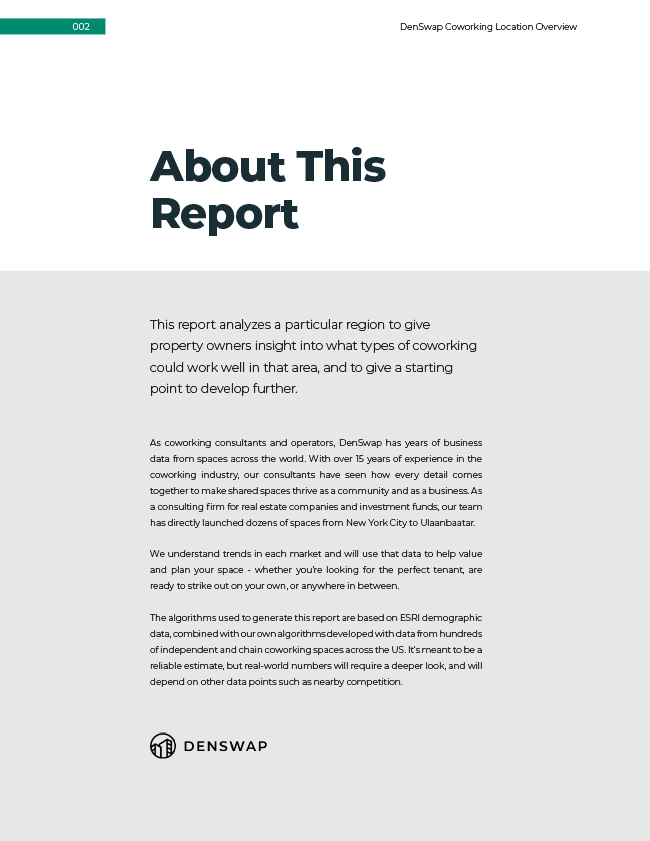
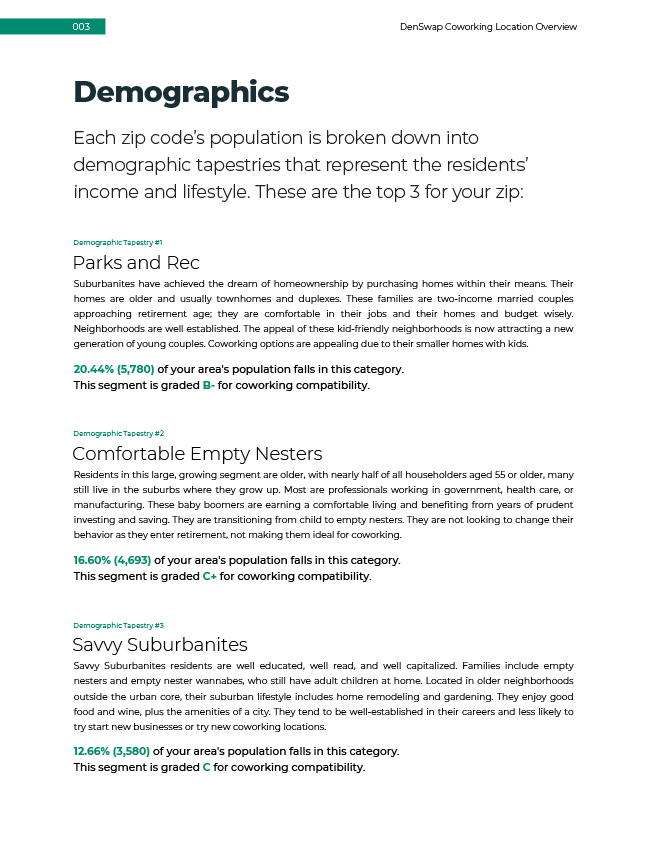
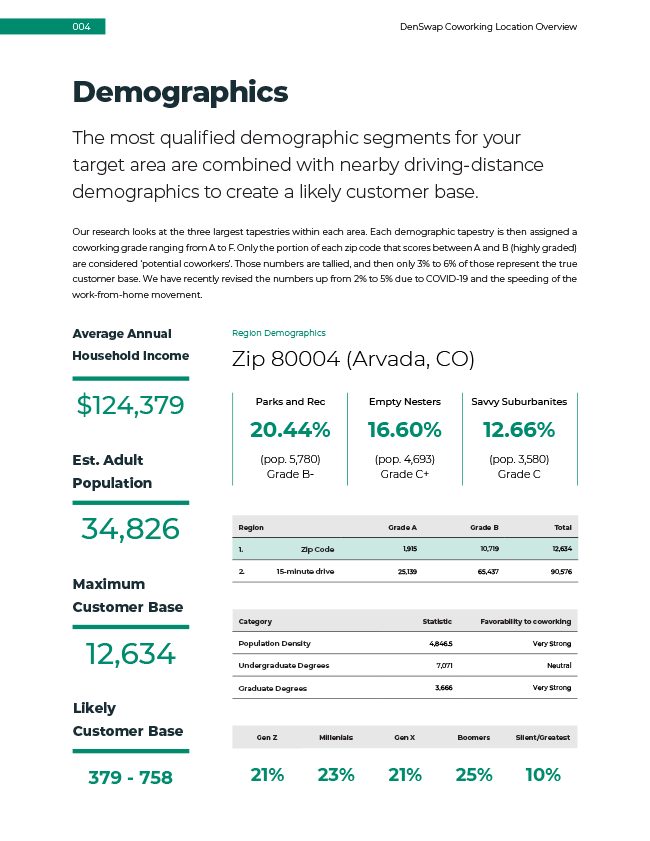
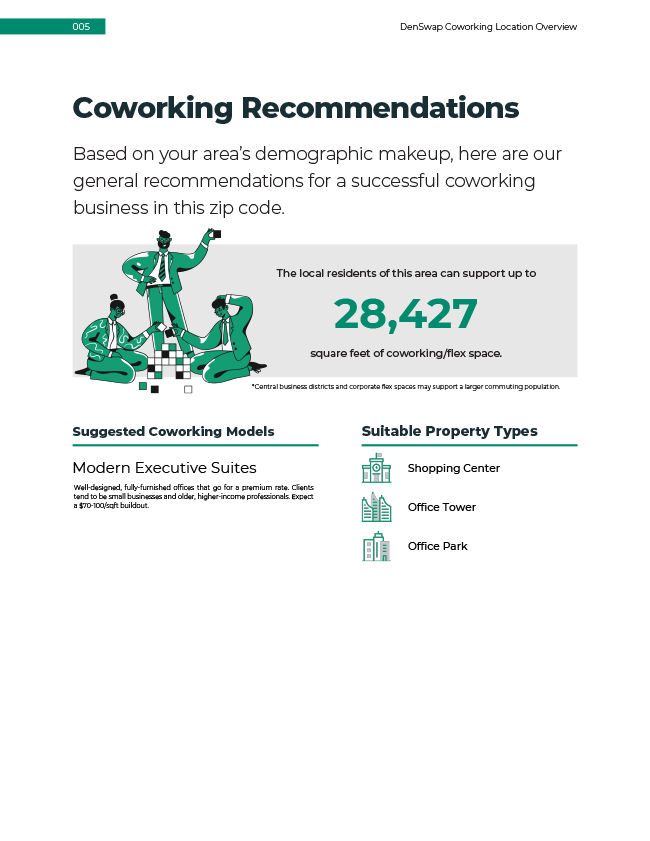
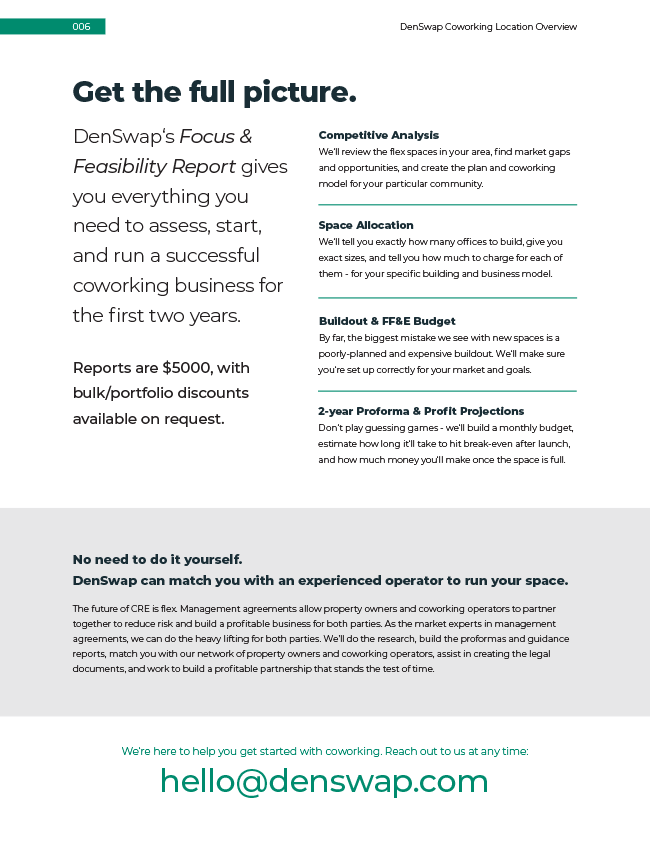
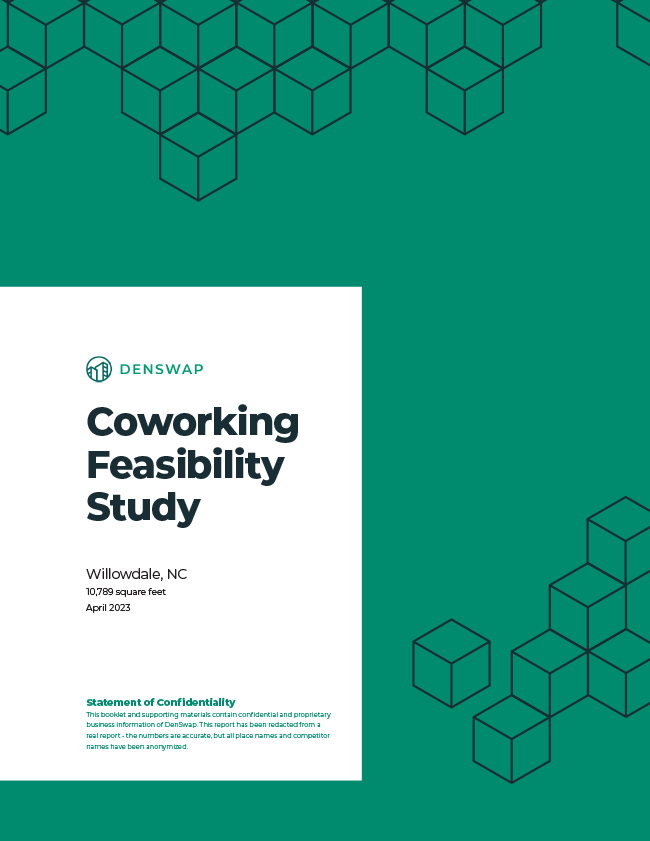
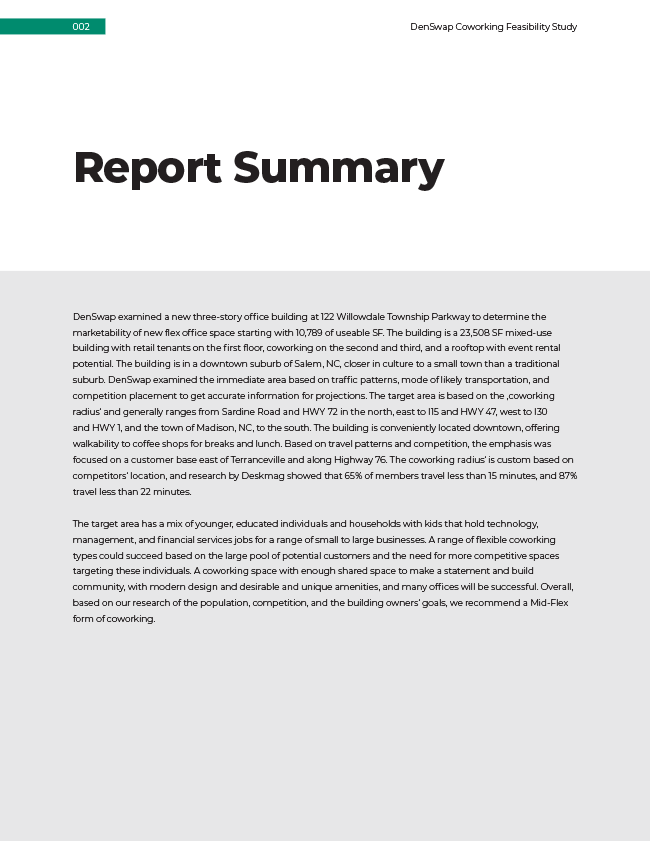
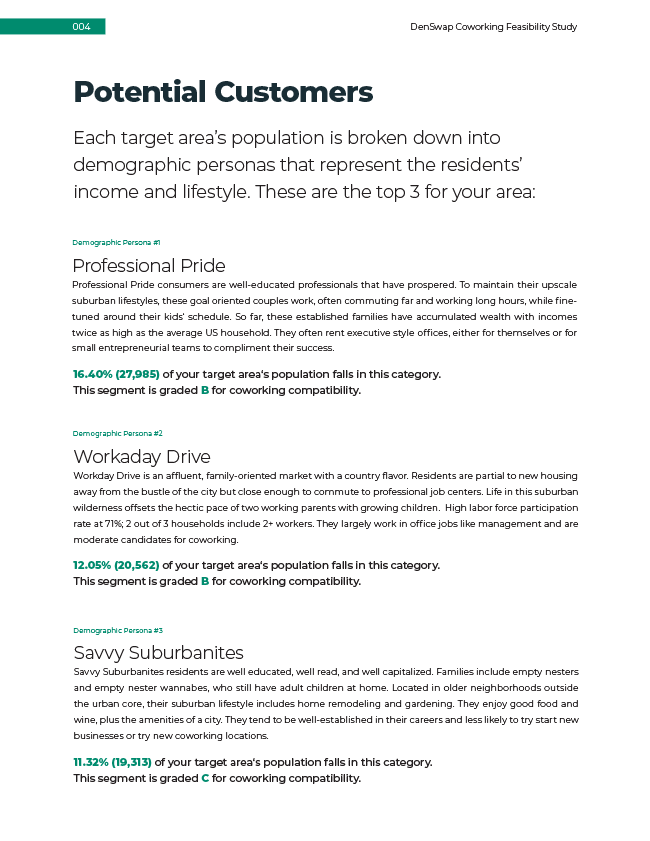
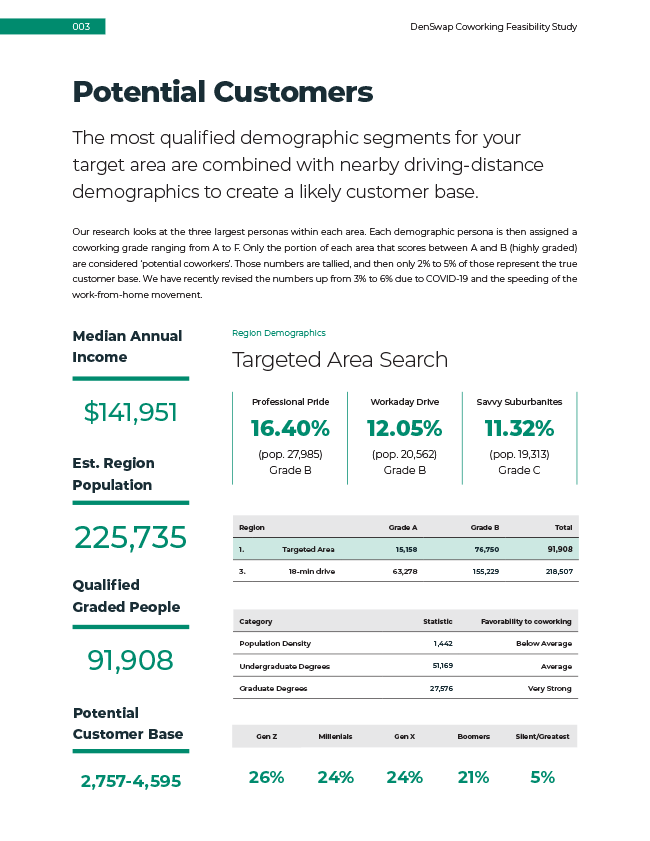
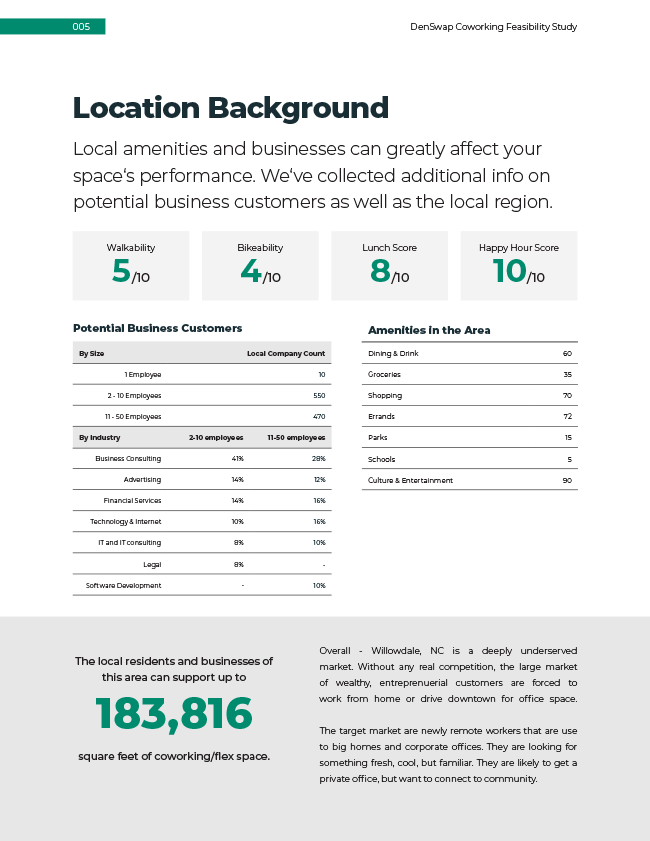
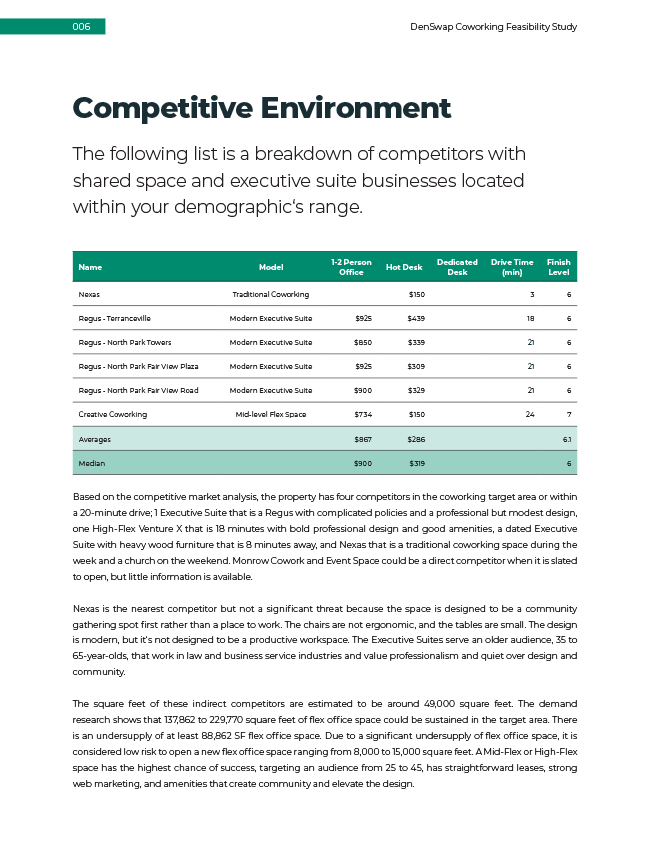
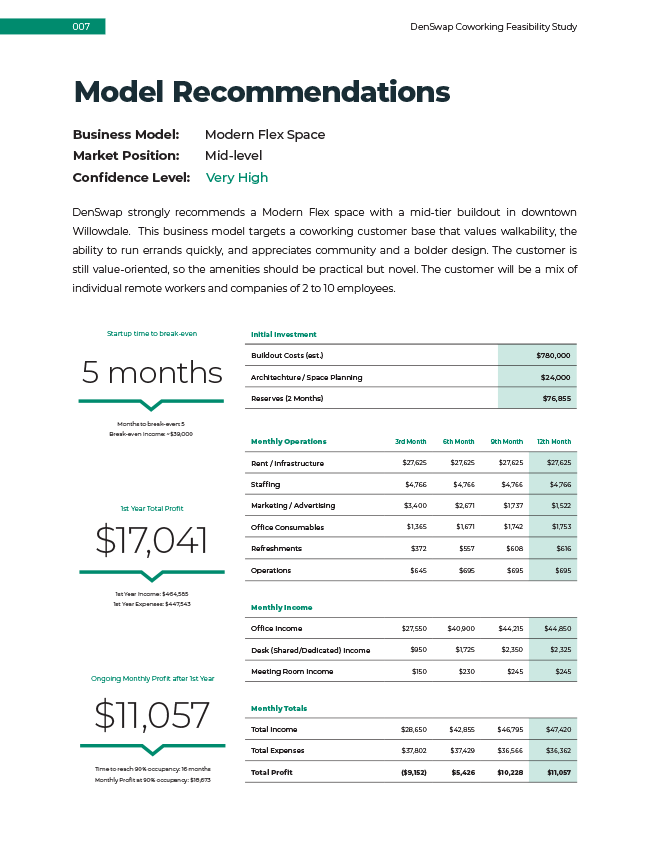
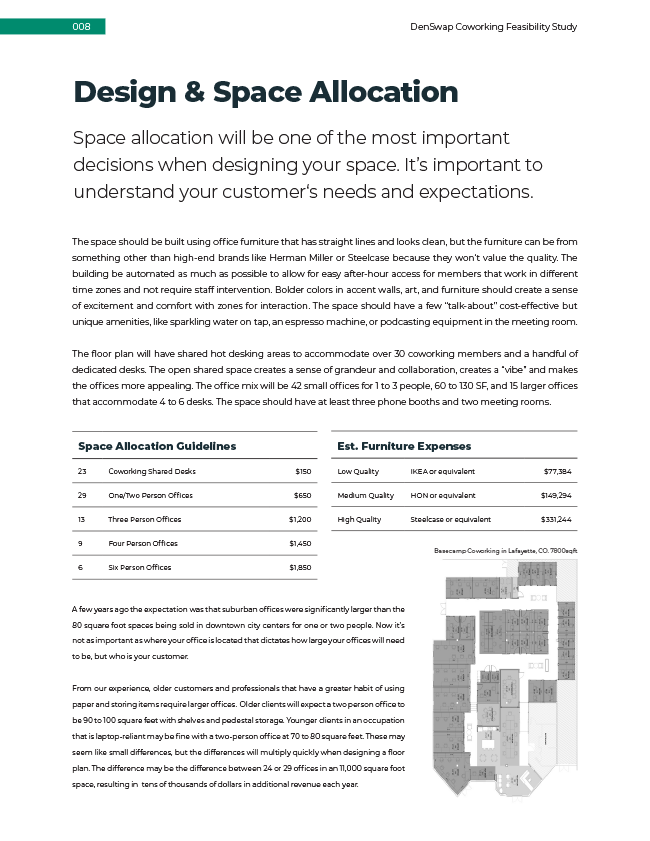
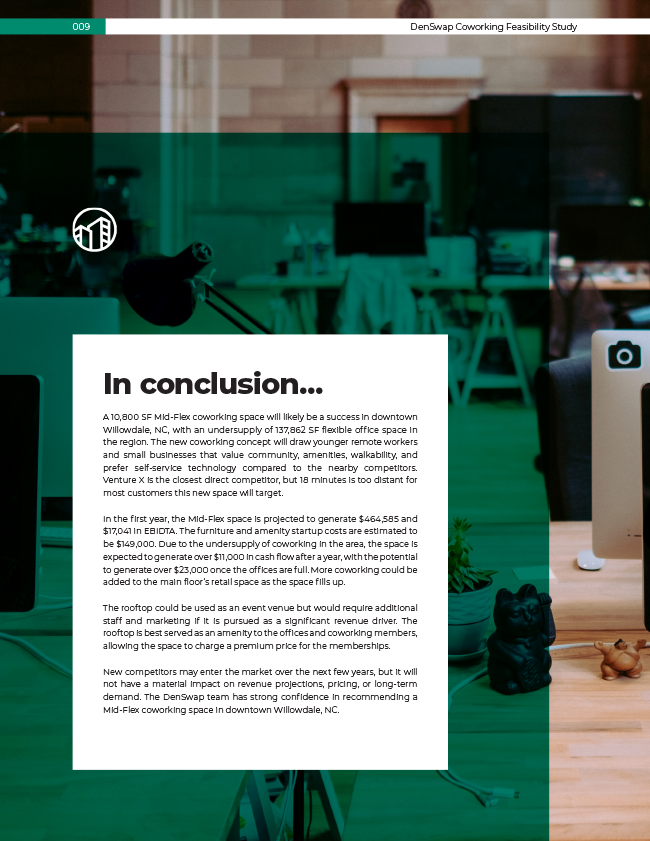
A DenSwap demand report quantifies whether local flex and coworking demand supports this direction for your specific asset and market. It covers demographics, total supportable square footage, viable business models, and recommended operator types, delivered in 24 hours for $500. Recover market visibility before the rent roll forces the question. Right now, the choice is still yours to make.
You can download a sample report here to see exactly what the analysis includes.