



A mid-size office building sits half-vacant. Brokers recommend cutting the rate to land a long-term anchor tenant. The owner agrees. Months pass. Meanwhile, a coworking operator tours twice, asks about shorter-term licensing structures, and gets turned down. The deal doesn't feel real. Six months later, that operator has signed a block down the street. The owner is still waiting for the anchor.
This scenario plays out constantly, and the logic behind it deserves scrutiny. The assumption is familiar: a long-term lease signals asset strength. A flex arrangement signals desperation. Holding out for the traditional deal is discipline. Entertaining shorter commitments is a concession.
Protecting that assumption makes sense when the asset is performing. Once it isn't, the lease structure itself becomes a positioning decision. It tells the market who you are willing to do business with. And for underperforming assets, a traditional-lease-only posture is broadcasting a specific message: we don't want the tenants who actually want us.
The traditional long-term lease is not a neutral holding strategy for struggling assets. It is an active demand filter, and it screens out the exact operators and users who represent the building's most realistic path back to productive use.
The Demand Signal Owners Are Declining
Last year office valuations ended down 11%, and another rocky year is expected.[1][2] At the asset level, the picture is more specific: the operators and tenants circling underperforming office buildings today are disproportionately flex-first. Coworking operators. Hybrid-use concepts. Companies that need 18 months of space, not seven years.
Not a consolation prize. Market feedback.
A building that keeps declining flex interest while waiting for a traditional anchor is not exercising patience. It is making a positioning decision and calling it discipline.
Regional banks and institutional lenders are already categorizing a growing share of office inventory as functionally distressed, with "zombie" office buildings continuing to accumulate across metros where traditional demand has structurally retreated.[3] Tenants who would have signed five-year leases in these buildings three years ago have consolidated, downsized, or moved to newer product. The demand that remains looks different - shorter-commitment, operator-driven, and often coworking or flex-adjacent.
Owners can treat that signal as noise. Or they can recognize it as the market telling them what the asset can realistically become.
Multiple institutional sources tracking the 2025 macro outlook point to the same structural shift: traditional office demand is not rebounding to prior levels, and the assets most exposed are mid-tier buildings in submarkets where tenants have options.[4][5] Holding a traditional lease posture in that environment is not conservative. It is a bet that a shrinking pool of long-term tenants will choose your building over better-positioned competitors. For many assets, that bet has already lost.
The Real Question Is Testable
None of this means every underperforming office building should convert to coworking. That would be a different kind of bad assumption - just in the other direction.
The useful question is narrower: does local demand actually support the direction this asset is being pulled toward? If flex operators and short-term users keep circling, is it because the submarket genuinely has unmet coworking demand, or because those operators are casting a wide net and your building happens to be cheap?
The owners who test that question early keep their options. The ones who wait for a traditional tenant that never arrives don't.
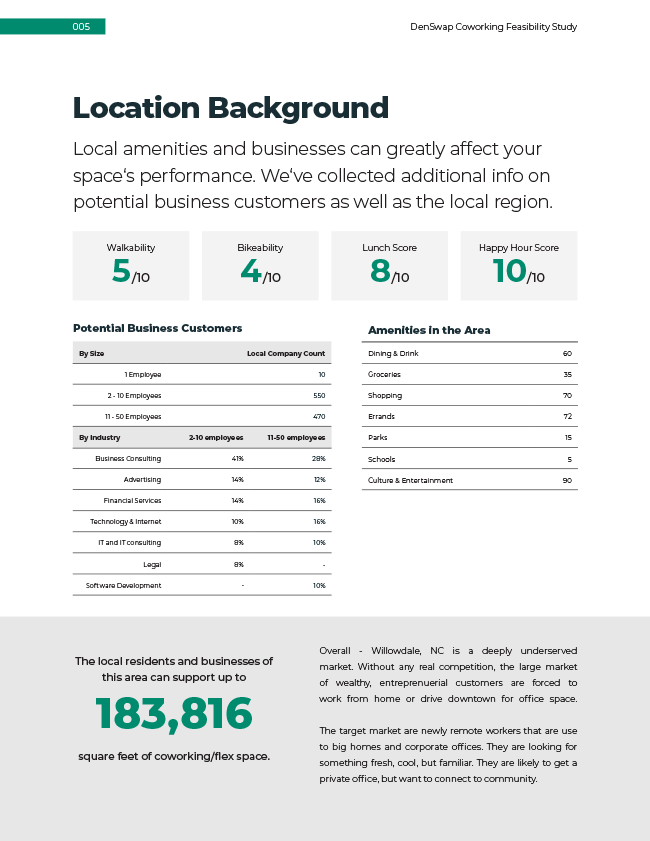
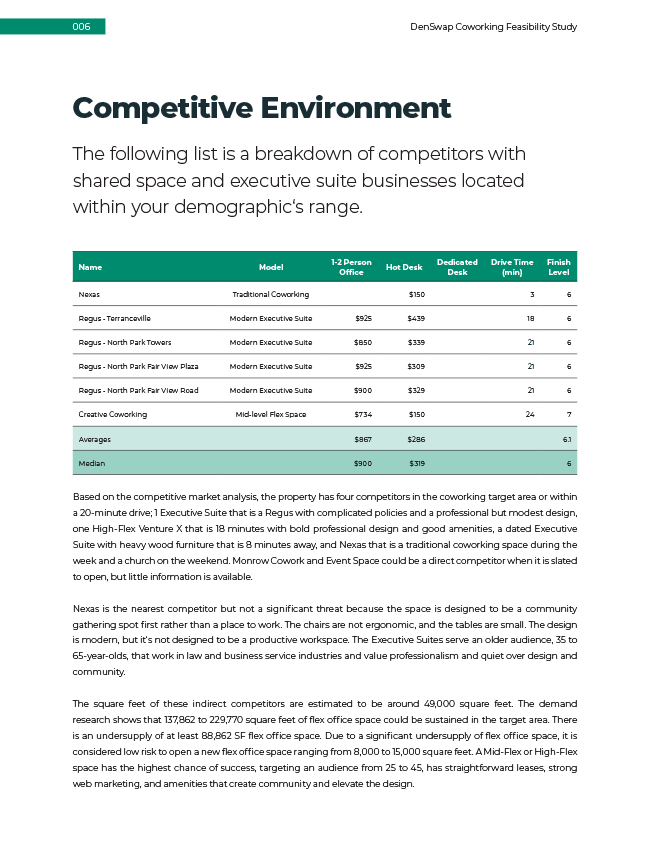
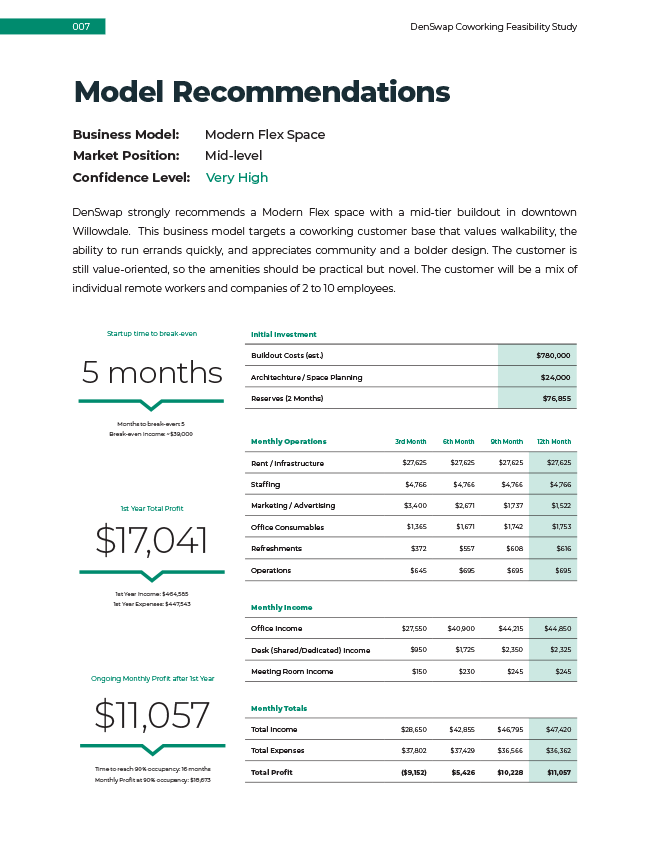
One coworking operator signing across the street is a data point. One data point is not a strategy. Whether the local demand profile, the competitive set, and the asset's physical characteristics actually align with a flex repositioning - that is a testable question with a real answer. And it is worth getting that answer before dismissing the signal or acting on it without evidence.
The risk owners fear is real: abandoning a known model for something harder to manage and harder to exit. But sitting on a traditional lease requirement while the building bleeds vacancy is not safety. It is cost without strategy, and the counterfactual carries its own exposure.
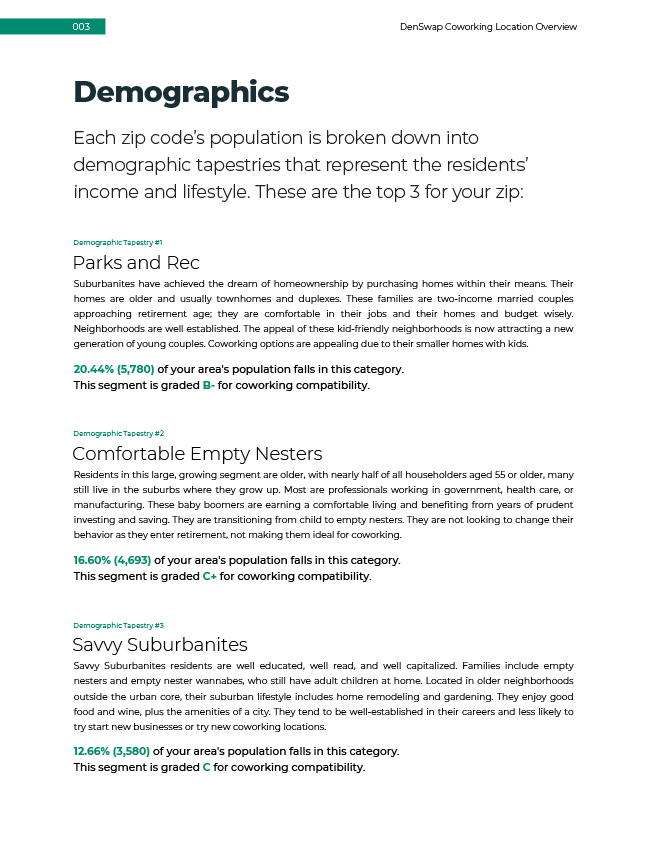
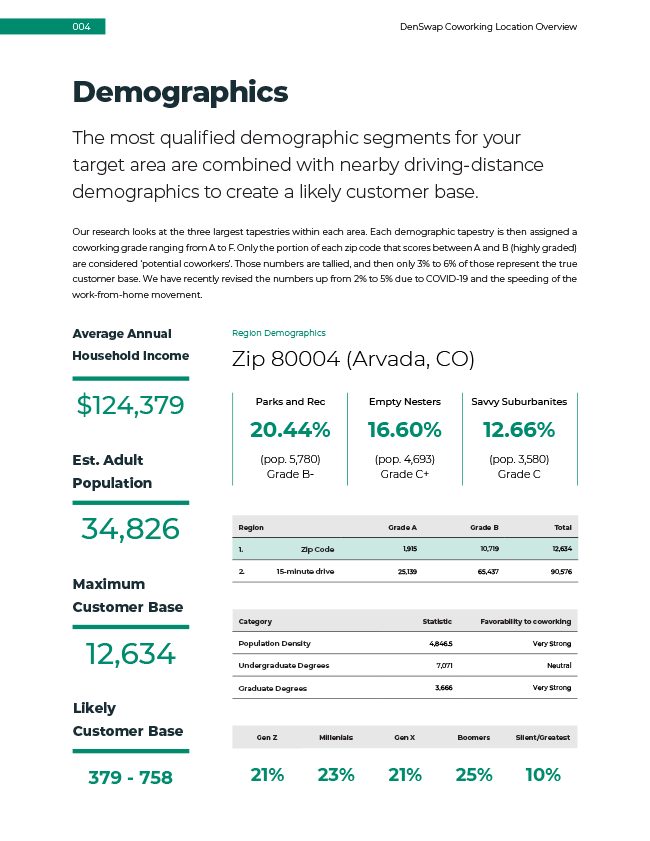
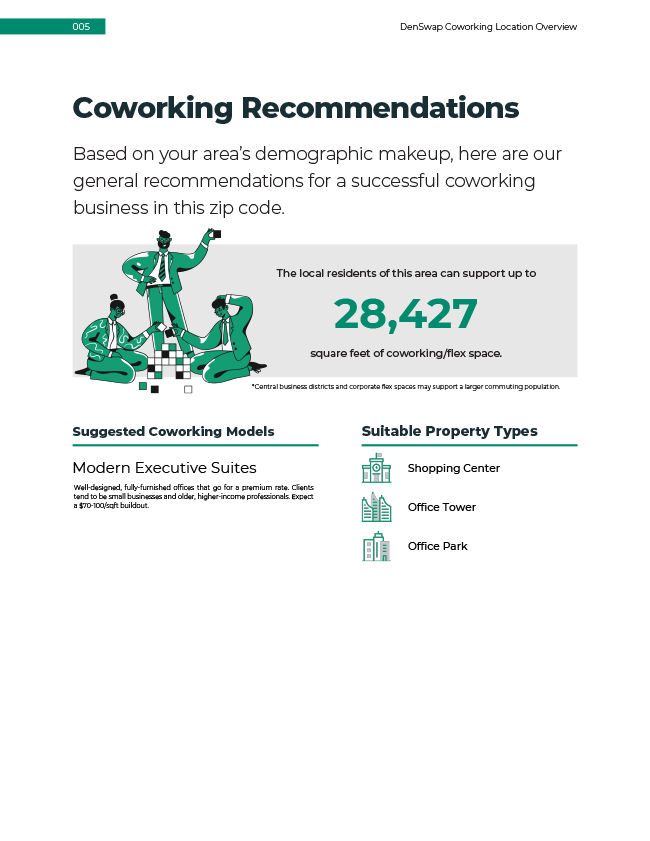
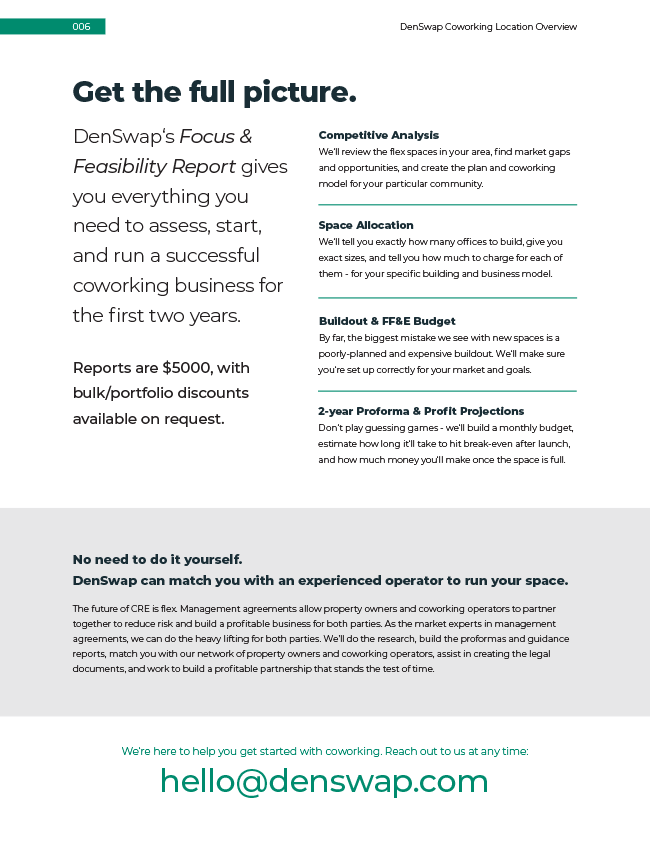
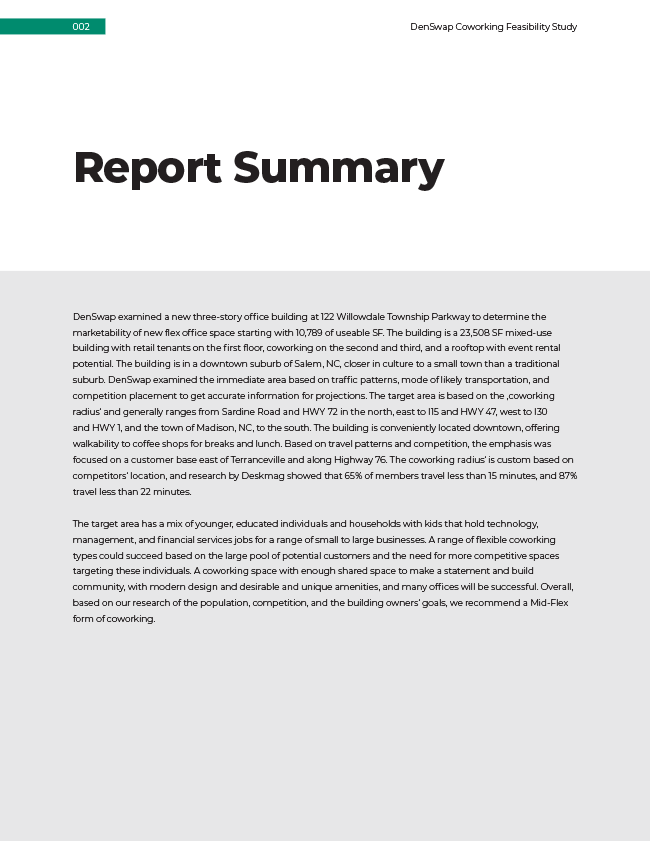
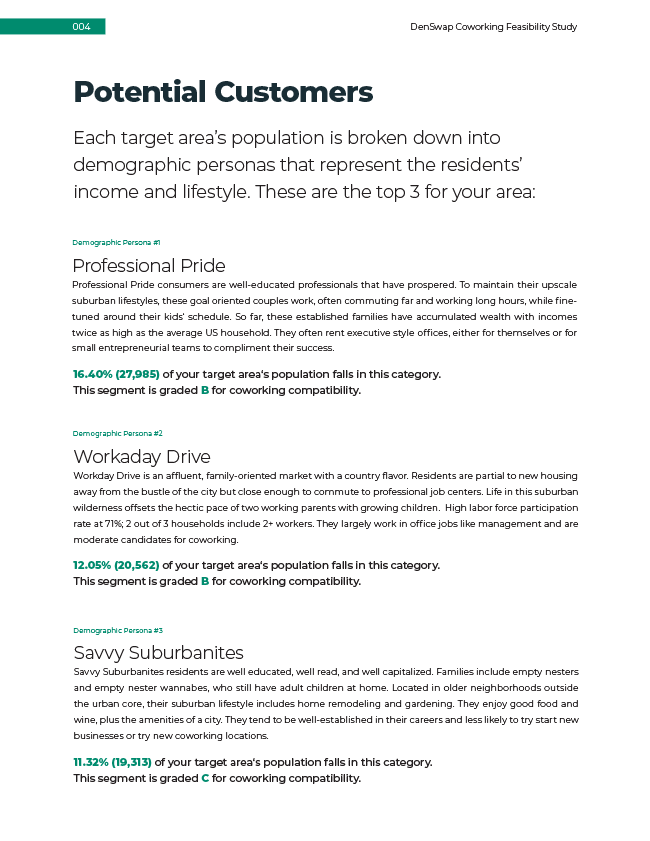
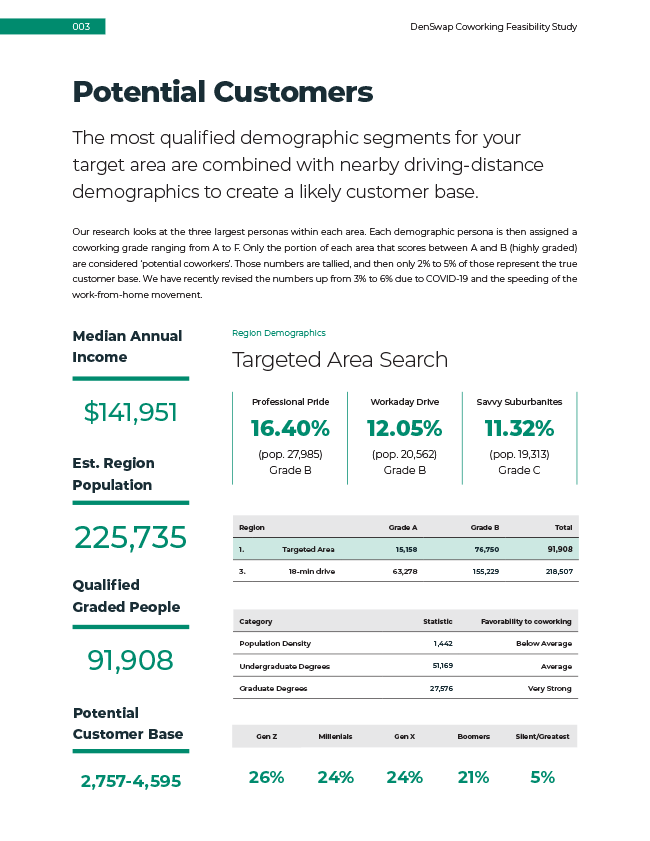
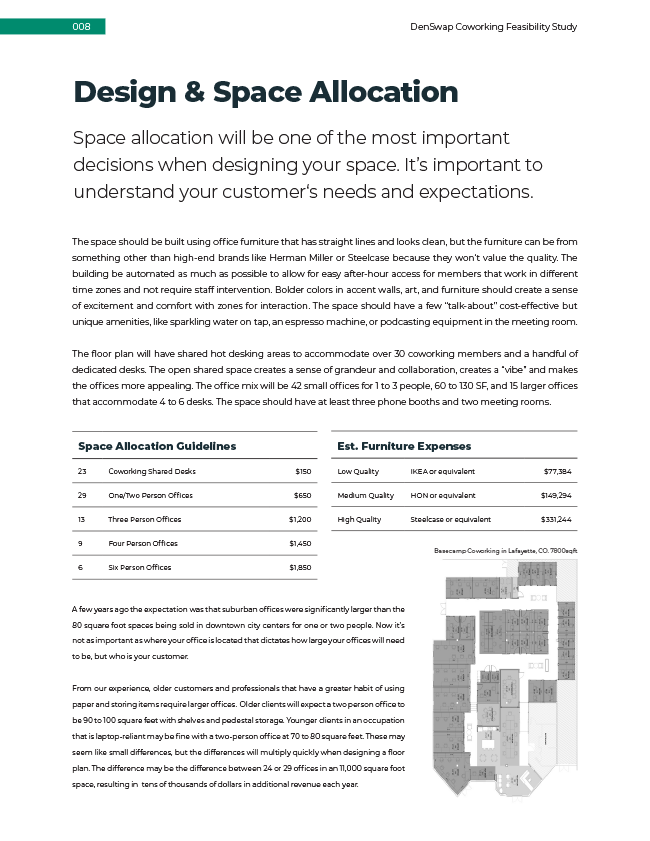
A DenSwap feasibility report gives you the local coworking and flex demand picture for your specific submarket, the competitive demand, and business modelling so the next lease structure decision is based on what the market actually wants and can support, not what the building was originally underwritten to attract.