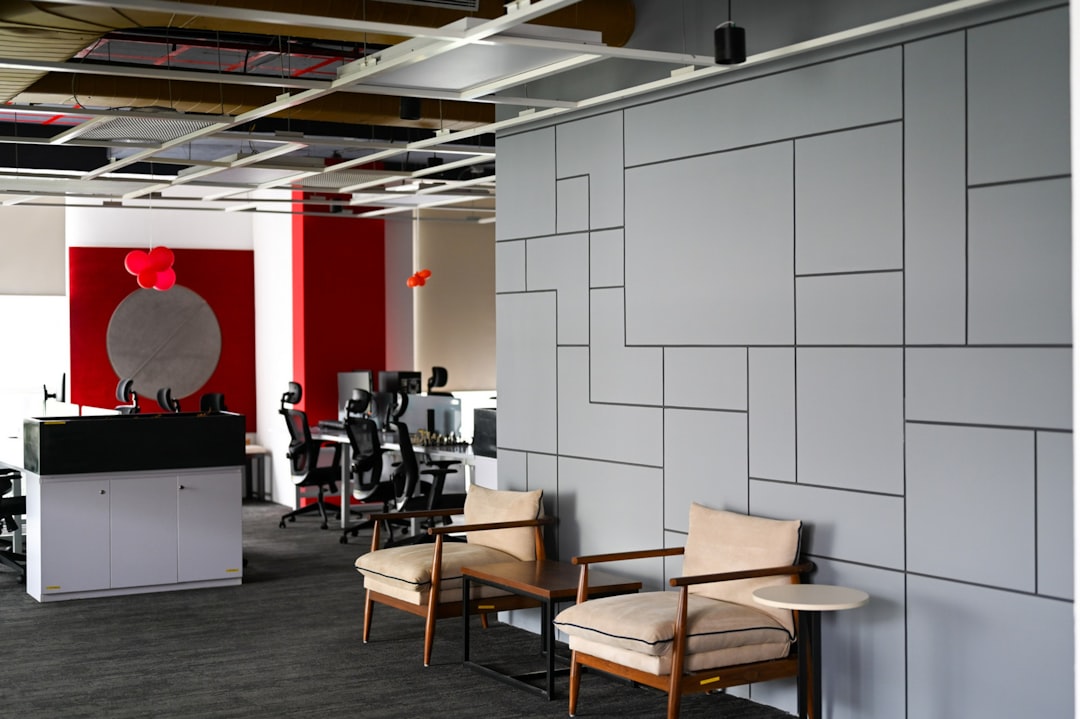





An owner holds an underperforming office building in a submarket they have operated for over a decade. Occupancy has eroded steadily. A flex or coworking conversion has been floated internally. The owner knows the building's history, the tenant mix that used to work, the nearby competitors who have come and gone. The confidence to move forward feels earned. The question the buildout budget actually requires, though, has never been formally tested: whether local demand for flexible workspace exists at the depth and pricing the conversion needs.
Asset knowledge is treated as demand intelligence. They are not the same instrument, and the capital consequences of conflating them are severe. This substitution is one of the most common and most expensive errors in commercial real estate repositioning.
Operational expertise is real. The question is what it actually measures.
Owners with long tenure in a submarket develop genuine knowledge. They understand the asset's physical condition, its maintenance history, the tenant types that have cycled through, the lease structures that held, and the ones that fell apart. They know which nearby properties compete and which brokers are active. None of this is trivial.
The logic that follows is intuitive: if you have operated a building for ten or fifteen years in the same submarket, you should be well positioned to evaluate whether a repositioning will work. Experience should count.
It does. But for a narrower set of questions than most owners realize.
Call it supply-side history. That knowledge base tells you what the asset has done, who has occupied it, and under what terms. It tells you how the property performed within previous market conditions. What it cannot tell you is what the local market currently demands, at what price, at what depth, and against what competitive supply.
That distinction matters most precisely when the repositioning strategy departs from what the building has historically done. A flex or coworking conversion is, by definition, a departure.
Asset Knowledge and Demand Intelligence Are Different Analytical Instruments
Asset knowledge answers backward-looking questions. What tenants signed here? What rents did they pay? How long did they stay? What capital expenditures kept the building competitive?
Demand intelligence answers forward-looking questions. What does the local market want right now? At what utilization depth? At what price point? Against what existing and pipeline competitive supply?
The distinction is sharpest for flexible workspace conversions because the economics are fundamentally different from traditional lease structures. A conventional office repositioning needs a tenant willing to sign a multi-year lease. A coworking or flex conversion needs something else entirely: a market deep enough to sustain recurring utilization across memberships, day passes, private offices, and meeting rooms.
A coworking conversion does not need a tenant who will sign. It needs a market deep enough to sustain recurring utilization. Those are not the same threshold.
Utilization economics operate on volume, frequency, and local density of demand. They are sensitive to the mix of freelancers, small firms, remote workers, and enterprise teams within a defined radius. Pricing relative to nearby alternatives matters. So does demand depth - enough that occupancy stabilizes at levels the proforma needs, not just enough interest to fill a few offices in month one.
Asset history cannot answer any of these questions. Fifteen years of operating an office building in a submarket tells you what that submarket looked like as a traditional office market. That knowledge base has almost no predictive value for how the same geography will perform as a flex workspace market.
Office valuations ended 2024 down 11% nationally, with vacancy rates pushing past 19%.[1] The structural erosion in traditional office demand is well documented.[2] What is less documented, and far more consequential for individual capital decisions, is whether the demand that replaces traditional leasing exists in specific locations at the density required to support a flex conversion.
The Capital Consequence of Using the Wrong Evidence
Repositioning costs are largely fixed and front-loaded. Buildout for a coworking or flex format requires capital commitment before a single membership is sold. Furniture, infrastructure, technology, common area finishes, and operational setup all come before revenue.
Revenue recovery depends on utilization depth that must exist in the market before the capital is spent. Not after.
When asset familiarity substitutes for demand measurement, the capital decision rests on evidence that cannot validate the thing it needs to validate. The owner is confident, but the confidence is anchored to a different question than the one the buildout budget is asking.
Calculated risk requires measurement. An owner who commits buildout capital without measuring local flex demand is taking an unmeasured risk - and unmeasured risk cannot be managed, hedged, or priced into the investment thesis.[3]
Unmeasured risk cannot be managed, hedged, or priced. That is the actual cost of skipping demand validation.
Regional banks and institutional lenders are already performing triage on office assets where repositioning assumptions did not hold.[4] The pattern is consistent: capital was committed based on conviction rather than demand evidence, and the demand environment turned out to be thinner than the thesis assumed.
The issue is capital discipline, not owner competence. The market has normalized the idea that deep asset familiarity is sufficient diligence for repositioning decisions. Even sophisticated operators fall into it because the confidence feels earned. Extend-and-pretend dynamics across U.S. commercial real estate have deferred repricing on many underperforming office assets.[5] When those deferrals expire, the repositioning decisions that follow will carry even higher stakes. Owners who treat the next capital commitment as a thesis to be tested rather than a conviction to be funded will outperform.
The Right Evidence Applied to the Right Question
The corrective is matching the evidence type to the question being asked.
Two questions should be separated before any buildout budget is approved:
-
What do I know about this asset? Operational expertise belongs here. Asset condition, location quality, access, infrastructure capacity, zoning constraints. All legitimate inputs.
-
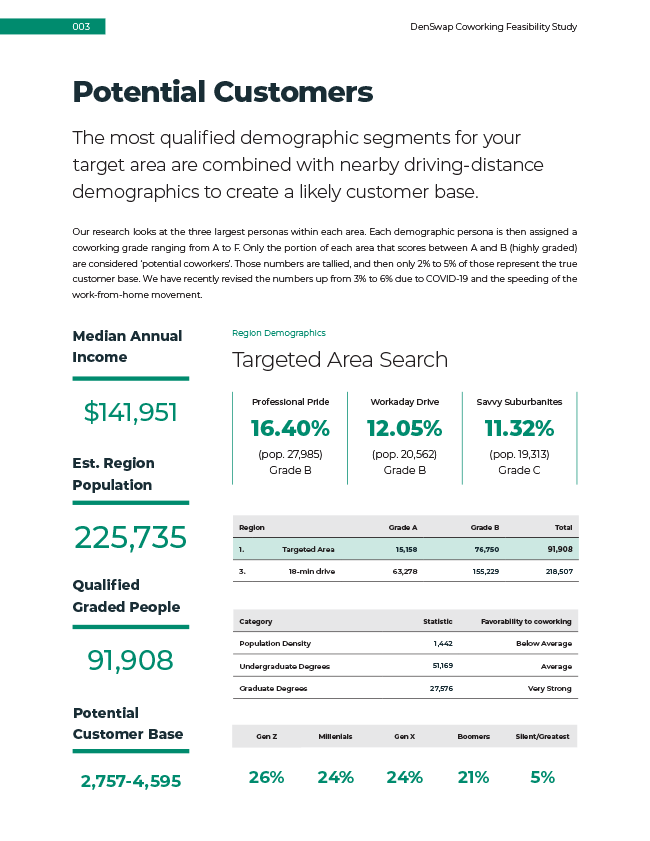
What does local demand for coworking or flex workspace actually look like? Answering this requires demand intelligence: demographic composition within the trade area, potential supply, business models to capture that demand effectively.
Question one is necessary. Question two is decisive. The repositioning decision should not be approved until both questions have been answered with the right evidence type for each.
Owners who separate these two questions make structurally better repositioning decisions regardless of market cycle. Asset intuition becomes a testable thesis. The assumptions that need to hold for the conversion to work get identified explicitly, and each one gets measured before capital is committed - not rationalized afterward.
Before a buildout budget is approved for a flex or coworking conversion, the demand environment should be formally measured. Not estimated from asset history. Not assumed from general market trends. Measured at the local level, with the specificity the capital decision requires.
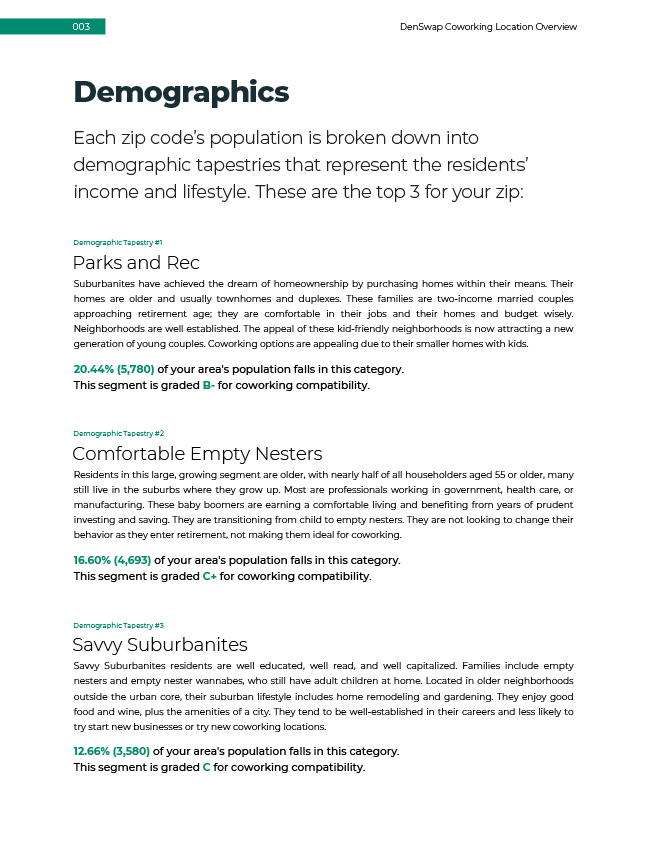
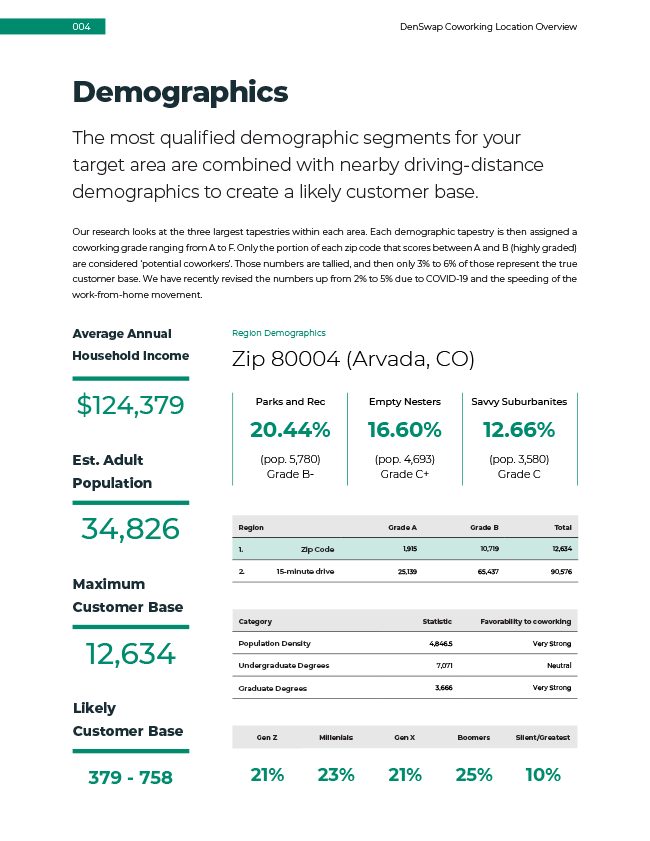
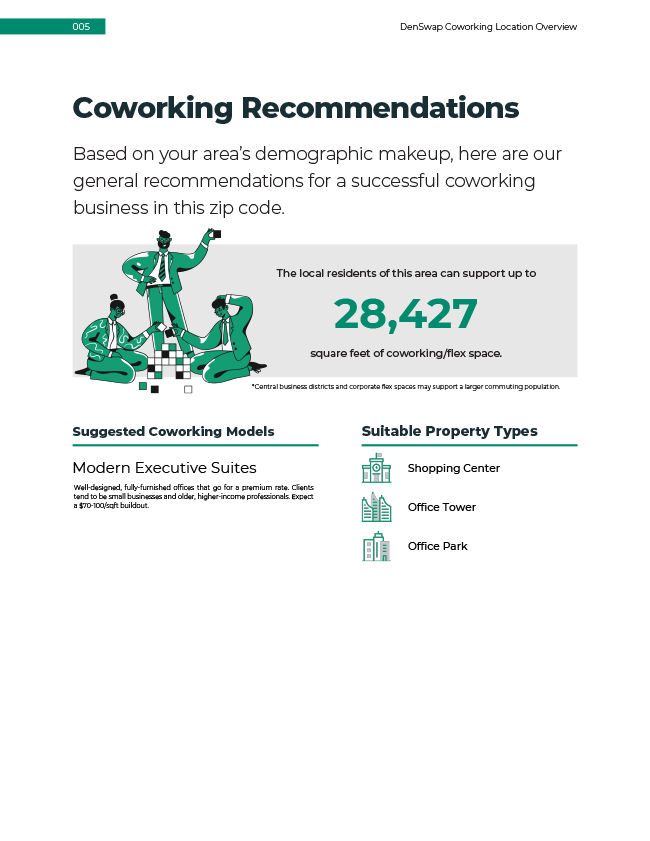
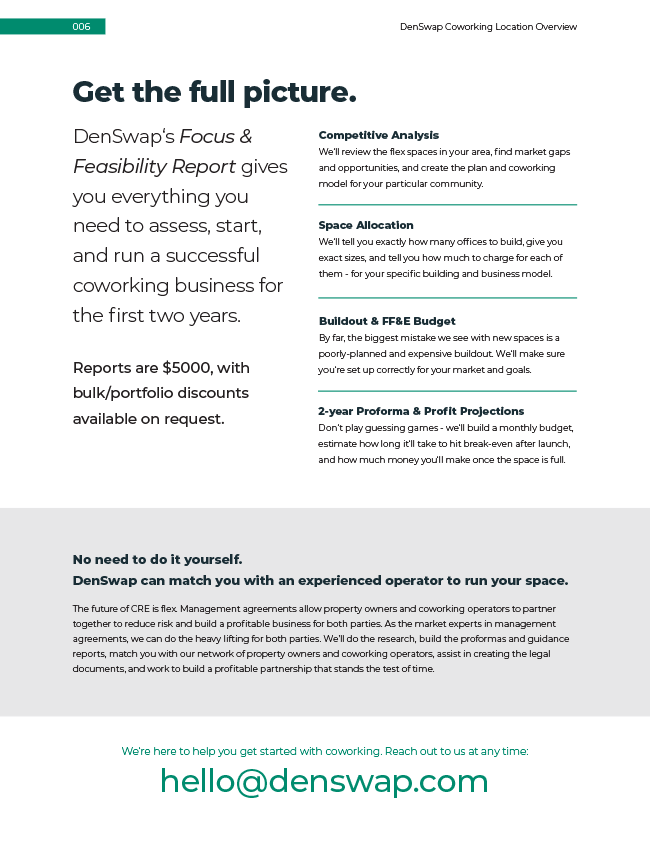
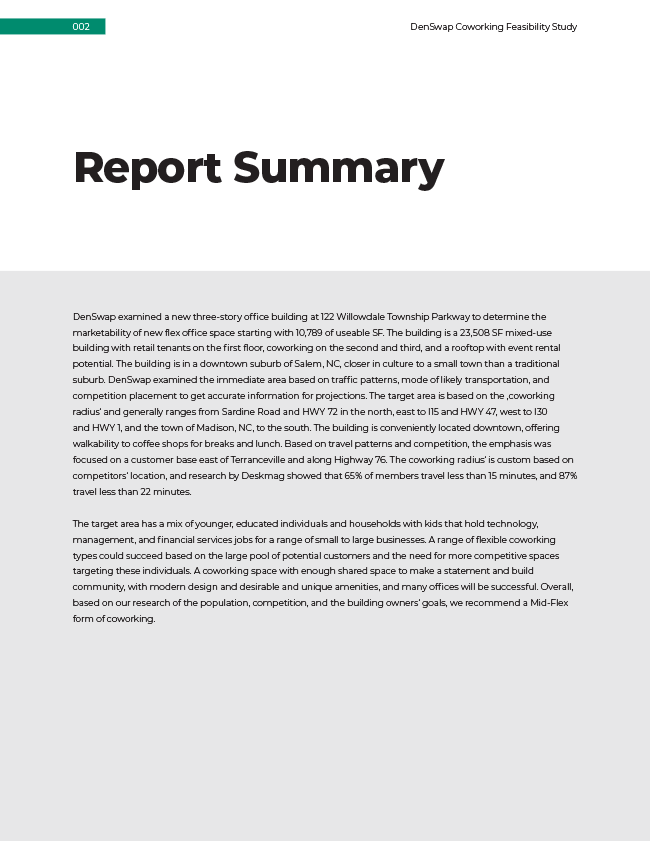
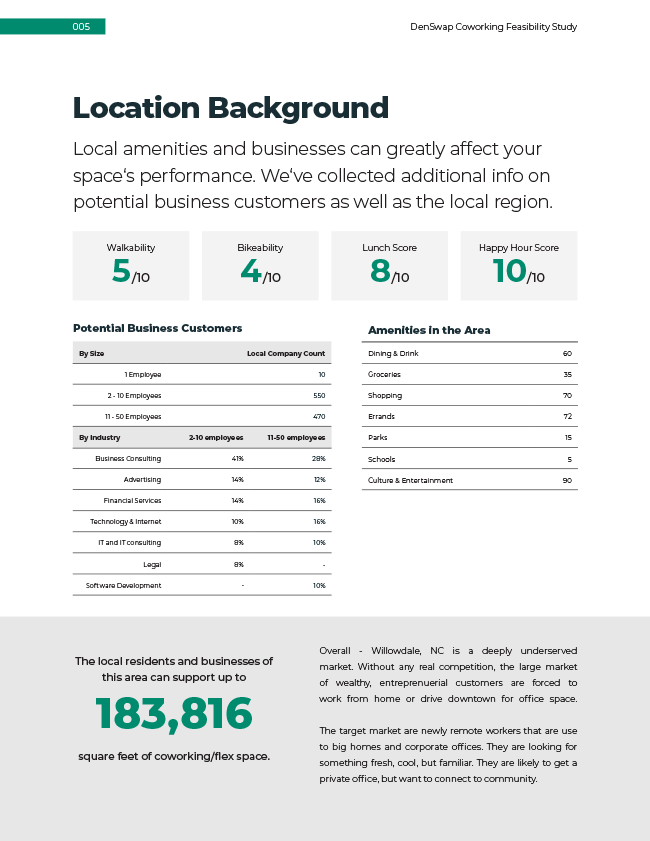
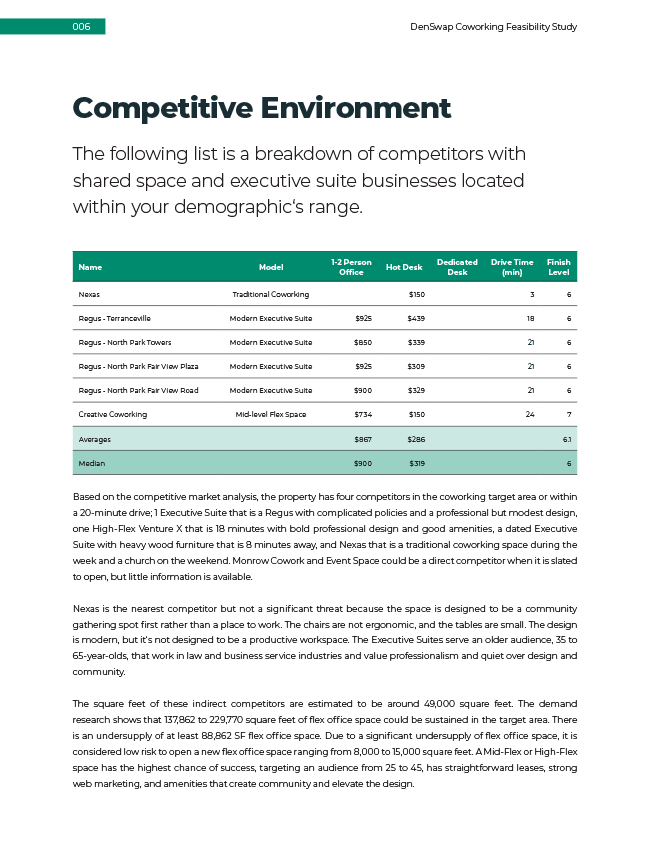
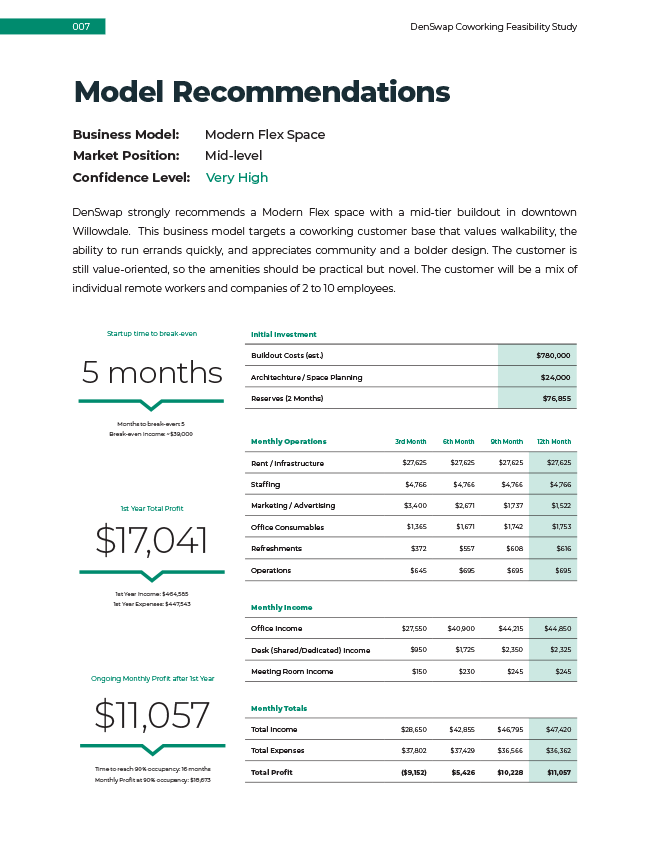
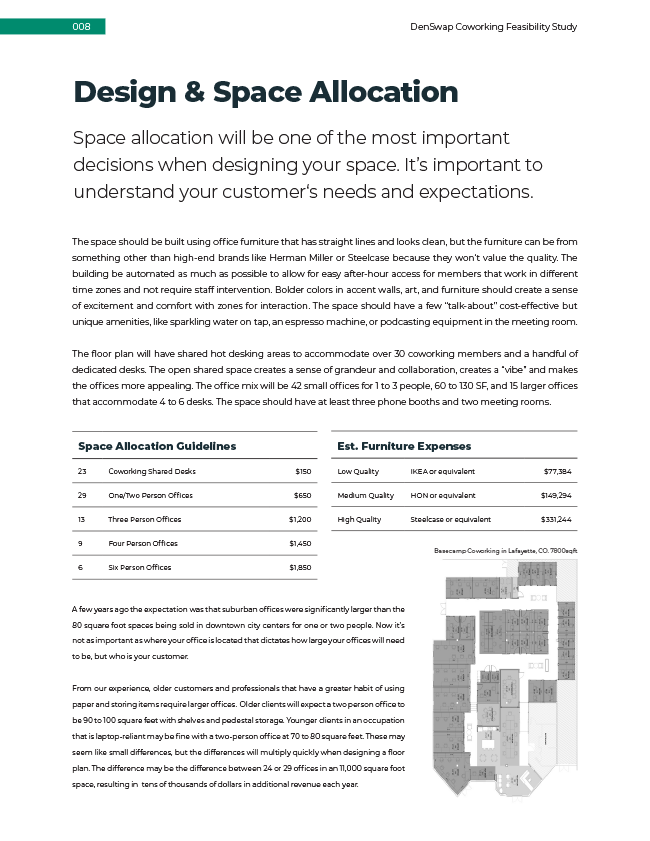
A DenSwap demand report measures exactly this: the demographics of the local trade area, the total square footage of coworking the market can absorb, and the business model configurations that align with actual demand. It costs $500, delivers in 24 hours, and answers the question that asset history cannot. For owners evaluating a flex conversion, it is the lowest-cost protection against the most expensive repositioning failure mode: building for a market that does not exist at the depth your proforma requires. If the demand is there, you can proceed further with a full feasibility report with competitive analysis, financial modelling, and buildout.
You can download a sample report to see the output before ordering.