




The Cost Tier Trap
An office owner with a partially vacant floor is comparing two paths. One is a low-cost coworking conversion: basic furniture, shared amenities, minimal buildout. The other is a fully amenitized flex suite: glass fronts, premium finishes, dedicated conference space. The gap in upfront cost feels manageable. What feels less manageable, six months after signing the construction contract, is the realization that neither model was validated against the absorption capacity of the surrounding submarket.
Neither path was ever really about cheap versus premium. Both paths share the same prior question: does either model have a realistic route to the utilization rate it needs to cover its own overhead?
Owners and their advisors frame coworking conversion as a cost-tier decision. The debate becomes lean conversion versus premium buildout, as if selecting the right price point solves the repositioning problem. This framing treats demand as a given and capital as the only variable worth controlling. With national office vacancy hovering near 19% and expected to climb further through through the year,[1] a growing number of owners are exploring flex conversion as a repositioning strategy.[2] But the industry's preferred framing of that decision has a structural blind spot.
Demand depth. And no amount of cost discipline compensates for converting space into a model that the local market cannot fill.
Every Model Carries a Utilization Floor
Projected coworking industry growth to $50 billion or more by the early 2030s[3] creates a seductive backdrop for conversion decisions. It suggests that if you build it, someone will come. That logic is dangerous at the submarket level.
Every coworking model, regardless of buildout tier, carries a fixed cost architecture. Furniture. Staffing. Software. Amenities. Marketing. Internet. Insurance. Cleaning. These costs combine to create a utilization floor: the minimum sustained occupancy the asset must achieve before it generates any margin at all.
A lean conversion does not escape this floor. It just reaches it with less cushion. Operating overhead for a basic coworking space is lower in absolute dollars, but revenue per member or per desk is also lower. Margin math compresses. A premium buildout commands higher rates, but its break-even requires more dollars through the door to cover the heavier capital service.
The cheap conversion and the premium buildout fail for the same reason: the submarket's demand depth was never measured against the model's utilization floor.
Both models require a specific volume of local, recurring demand. What the market is not asking is whether that demand exists in the specific geography where capital is about to be deployed.
What Happens When Cost Structure Precedes Demand Validation
When buildout tier is chosen before demand is validated, owners lock into a cost structure calibrated to a utilization assumption the submarket may never deliver.
Run the mechanics. A lean conversion in a demand-thin suburban submarket opens at 30% occupancy. Operating costs are modest but fixed. Revenue covers perhaps half the monthly overhead. Management assumes occupancy will build. But the surrounding area has a limited pool of independent professionals and micro-businesses, no enterprise tenant pipeline, and absorption crawls. The asset bleeds cash for 18 months before the owner exits the model.
Flip the scenario: a premium buildout in an urban submarket with three established flex operators within a half-mile radius. The buildout is beautiful. Pricing is competitive. But the demand pool is already being served. Absorption is slow because the incremental demand simply does not exist. The owner spends $150 per square foot on buildout and captures $22 per square foot in effective revenue. Those numbers never close.
With lenders increasingly scrutinizing office asset valuations and capital deployment strategies,[4] the margin for error on conversion investments is narrowing. A lean buildout in a demand-thin submarket still fails. A premium buildout in a saturated submarket still fails. Cost model and demand reality have to match, and that match has to be confirmed before capital moves, not rationalized after occupancy disappoints.
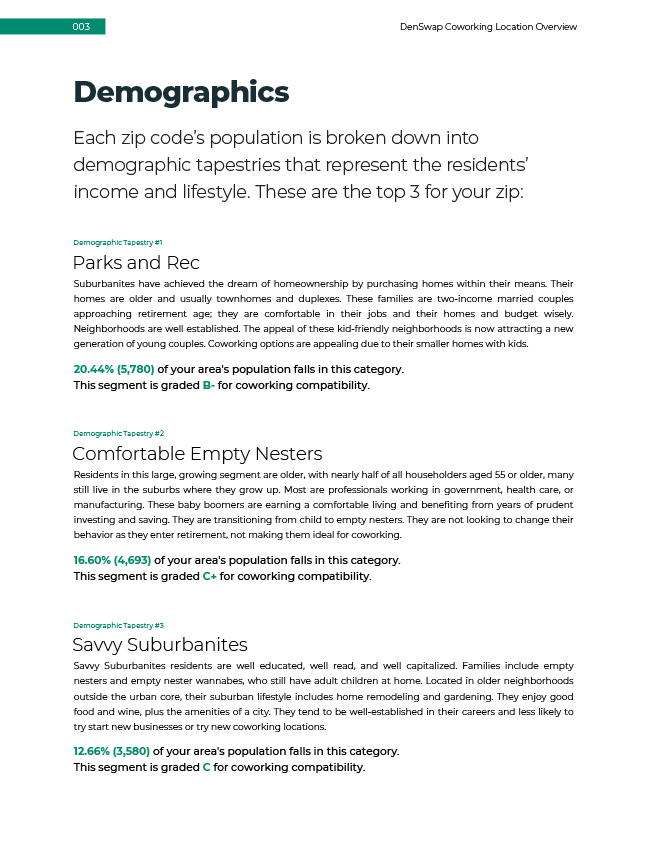
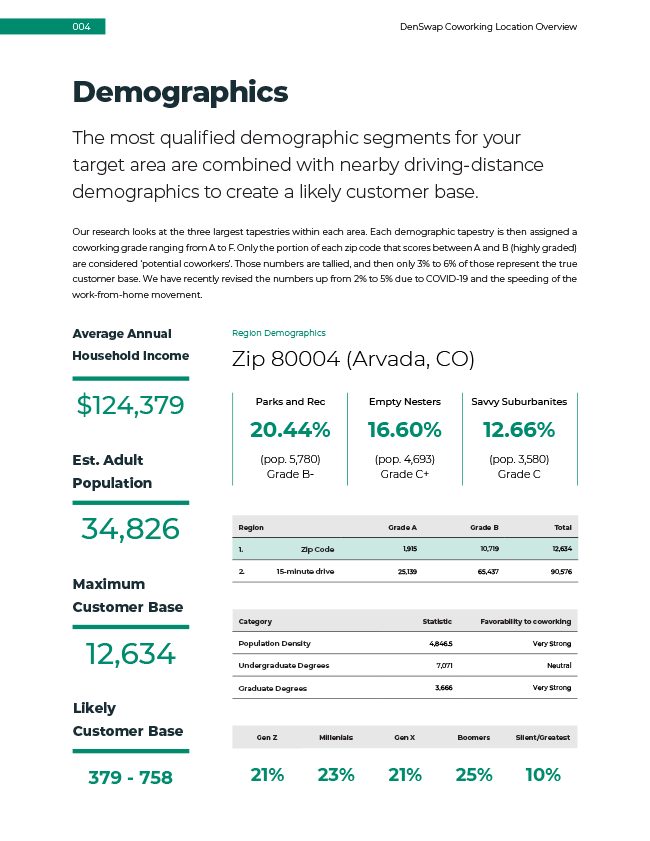
Regional and suburban office markets are seeing growing flex demand in some corridors,[5] but "some corridors" is the operative phrase. Demand is not evenly distributed. It clusters around workforce density, transit access, business formation rates, and competitive gaps. Picking a buildout cost tier without mapping these variables is making a capital bet on vibes.
No buildout budget can fix a demand problem. But a demand problem can destroy any buildout budget.
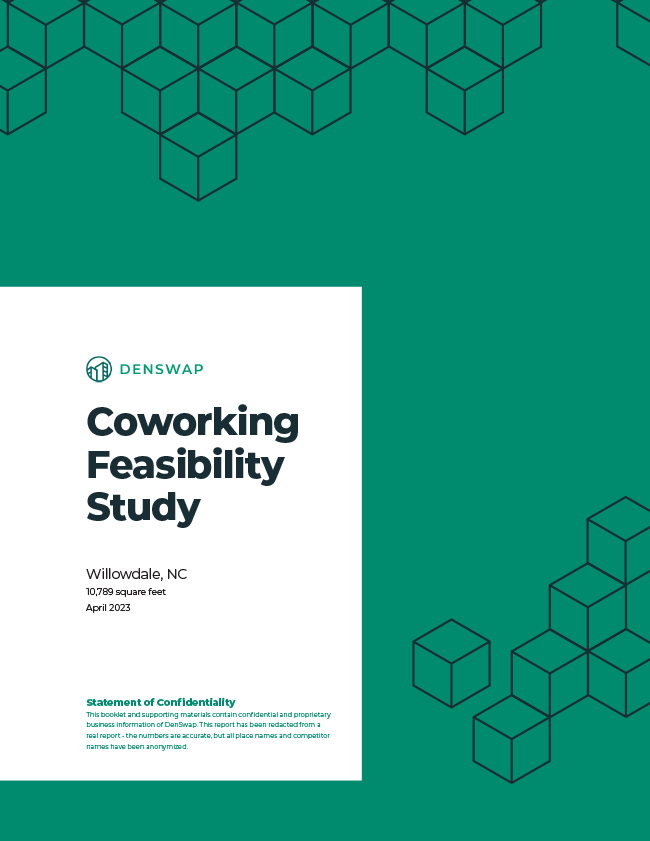
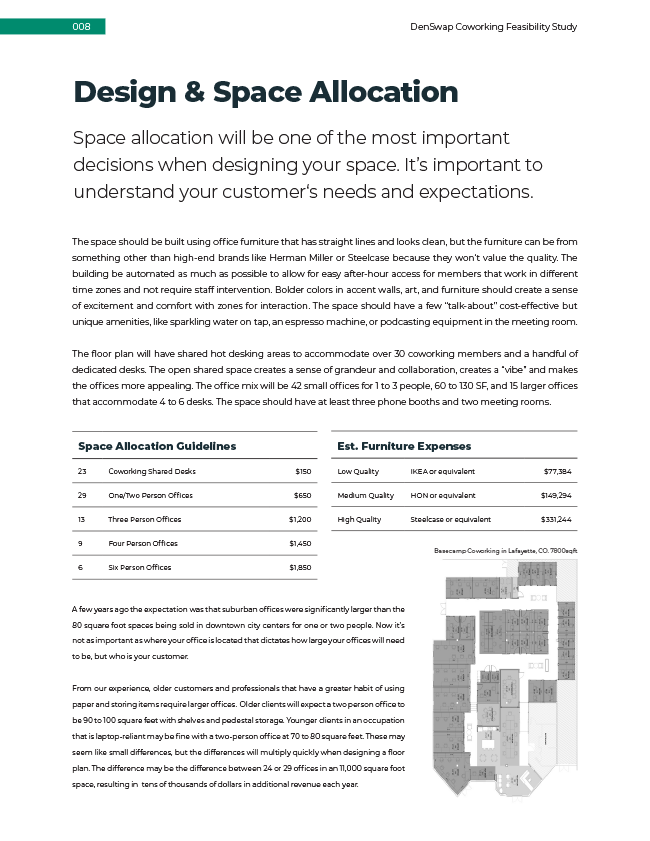
Coworking Feasibility Study
What owners actually need is a different first question: what does this submarket's demand depth support, and which cost model, if any, fits inside that constraint?
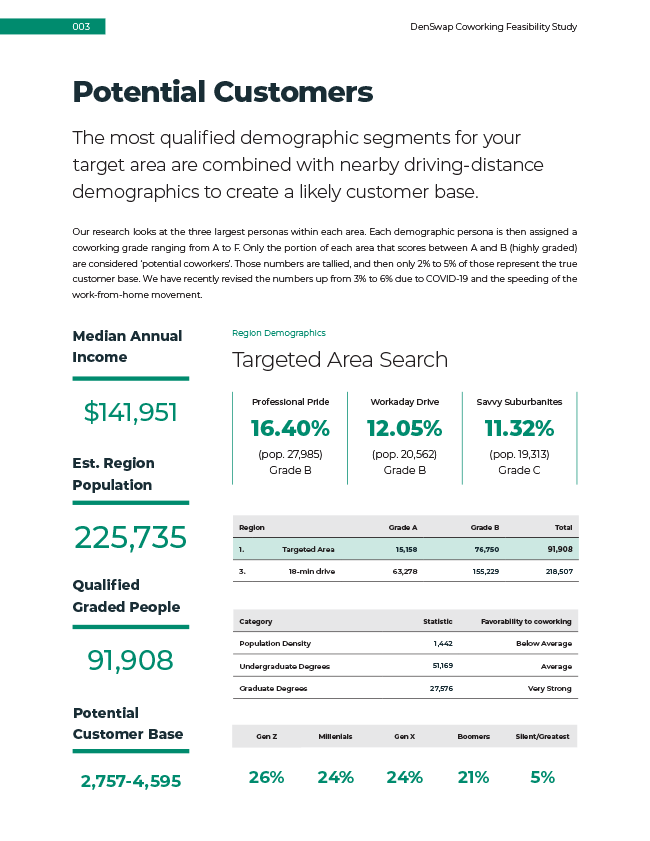
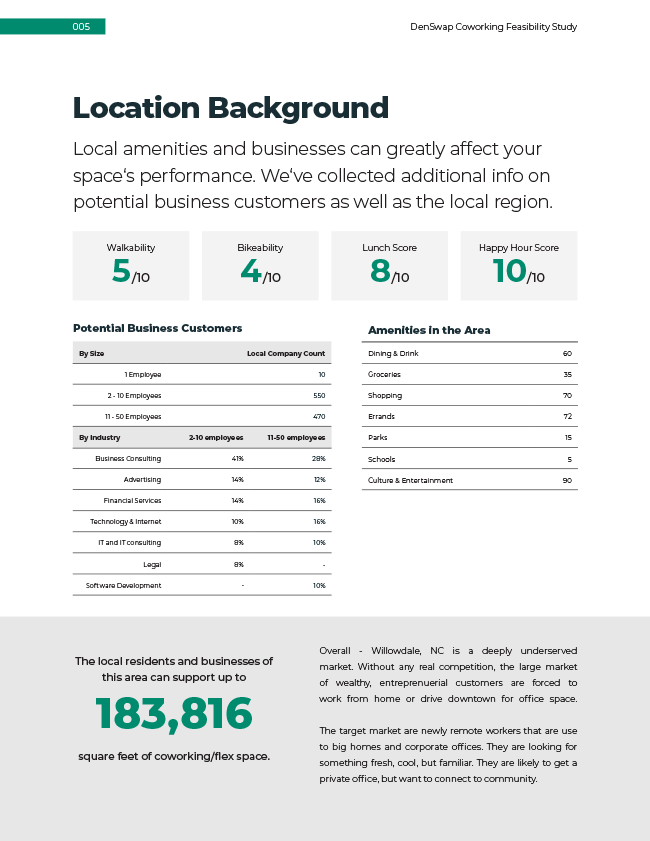
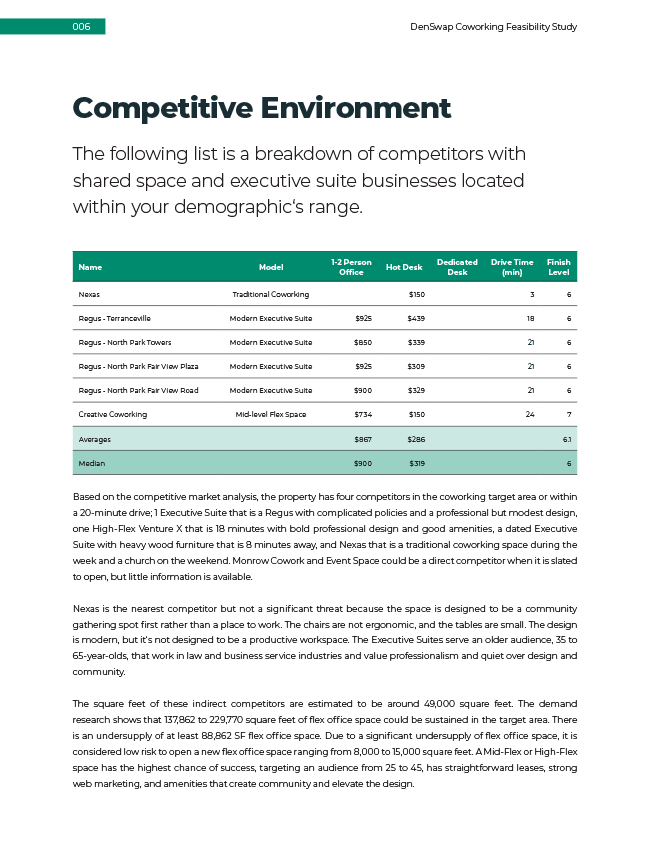
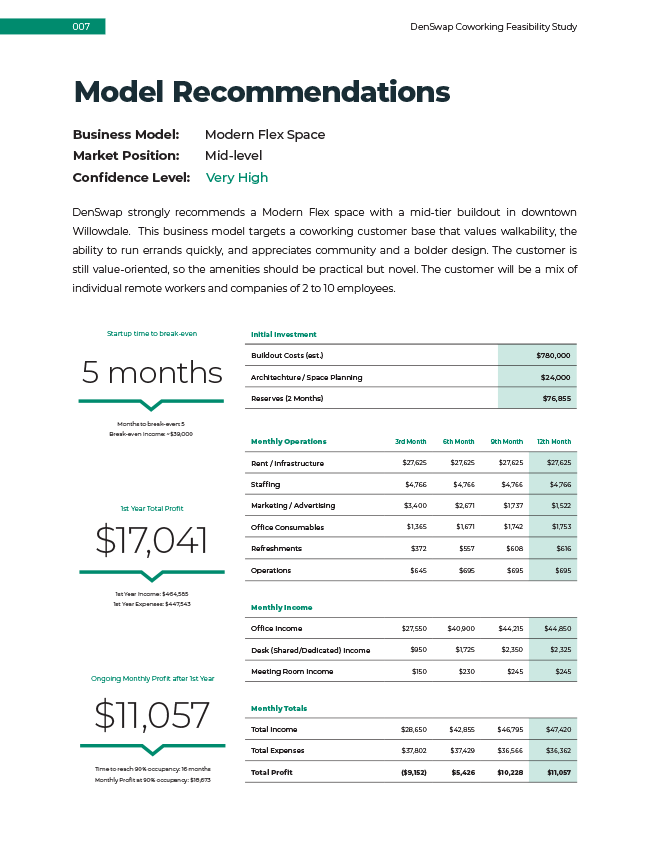
Feasibility, not design. That means measuring local workforce composition, business density, competitive supply within a defined radius, achievable pricing at various tiers, and the utilization rate each cost model needs to break even. Only after those variables are quantified does the buildout cost conversation become meaningful.
Validating this before construction is the only way to avoid building a cost structure the market was never going to reward. An owner comparing a $60 per square foot lean conversion against a $150 per square foot premium suite is asking the wrong question if neither model can clear 70% occupancy in that location.
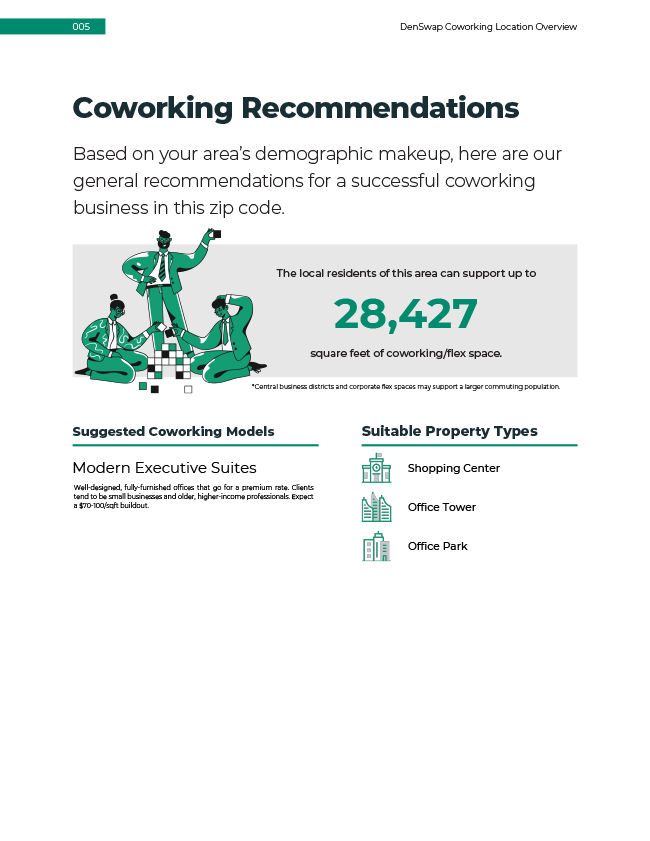
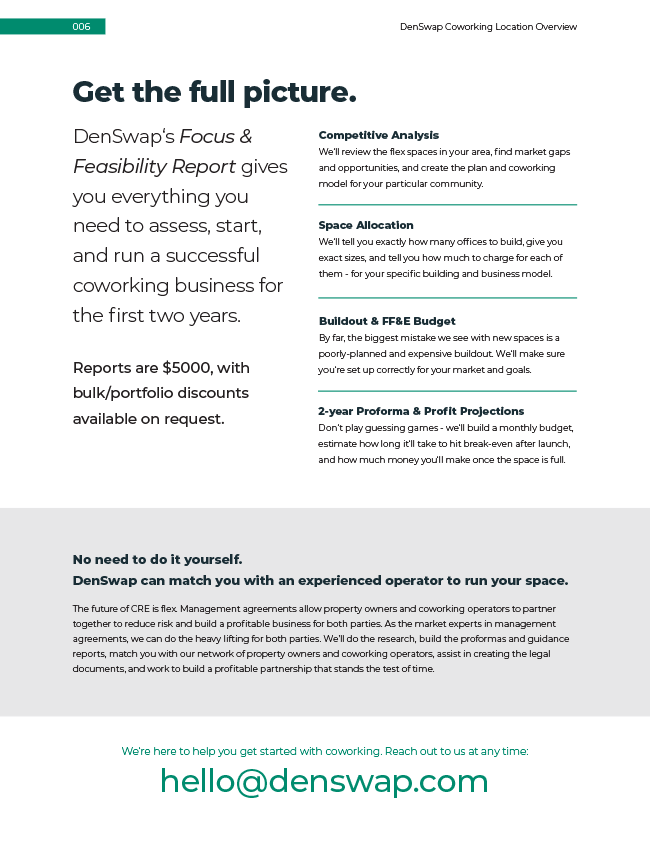
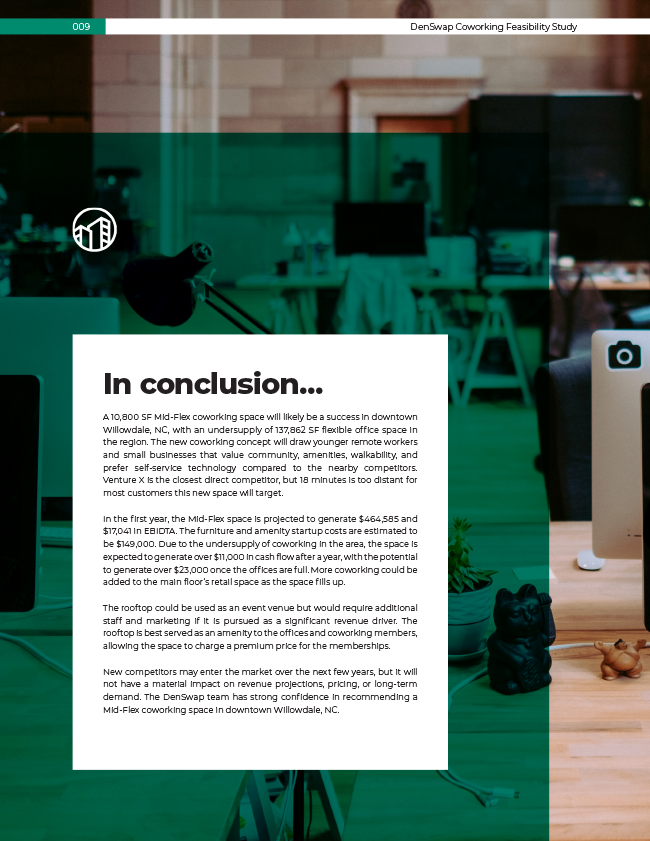
Before any capital commitment, stress-test the demand depth, competitive landscape, revenue projections, and break-even utilization against the specific submarket. A DenSwap feasibility study is built to deliver exactly that work: demand and demographic analysis, competitive mapping, revenue and expense projections, buildout budgeting, pricing strategy, and a 2-year proforma for each viable model. Download a sample to see the depth of analysis before committing.
Answer the demand question first. The cost tier decision gets a lot easier after that.